Contents
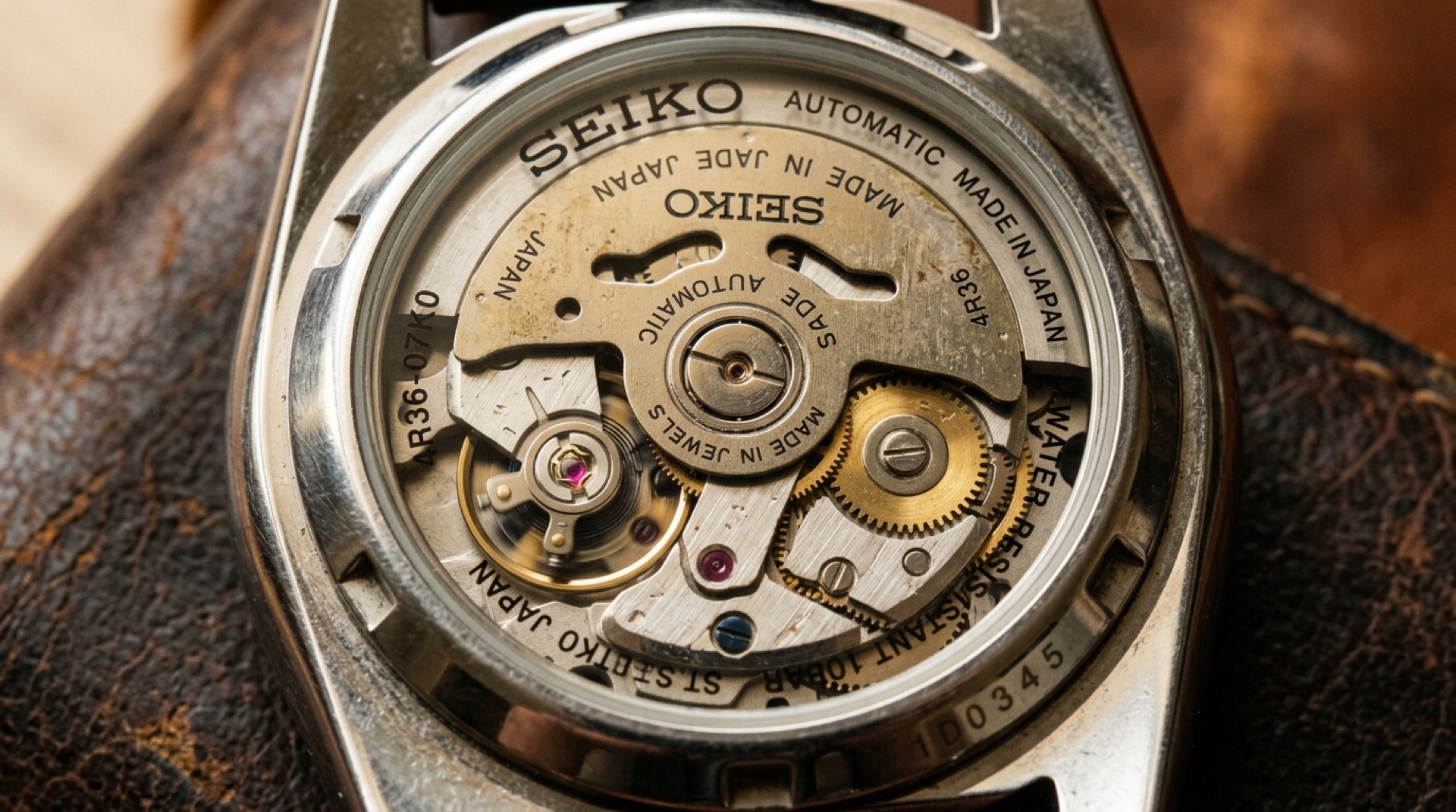
Some calibres make history through extreme complications, others through unshakeable toughness. The Seiko 7S26 belongs firmly to the second category. Affectionately nicknamed the “tractor” by enthusiasts the world over, this automatic movement powered some of the brand’s most iconic watches, starting with the legendary SKX007.
1. The origins of the 7S26 (1996)
Launched in 1996 to replace the 7002 series, the 7S26 was designed with a clear goal: to produce an automatic movement that was affordable, simple and very nearly indestructible. For more than two decades — until it was gradually replaced by the 4R36 family — it was the beating heart of the entry-level Seiko 5 range and of their 200 m divers.
Production has now ended, much to the delight of collectors hunting for pre-owned pieces in original, untouched condition fitted with this historic calibre.

2. Technical specifications and the Magic Lever
The 7S26 neither hacks nor hand-winds. It beats at 21,600 vibrations per hour (3 Hz) and has 21 jewels.
- Magic Lever: allows the rotor to wind the mainspring whichever way it turns.
- Power reserve: around 41 hours.
- Complications: quick-set day (bilingual English/kanji on JDM models) and quick-set date.
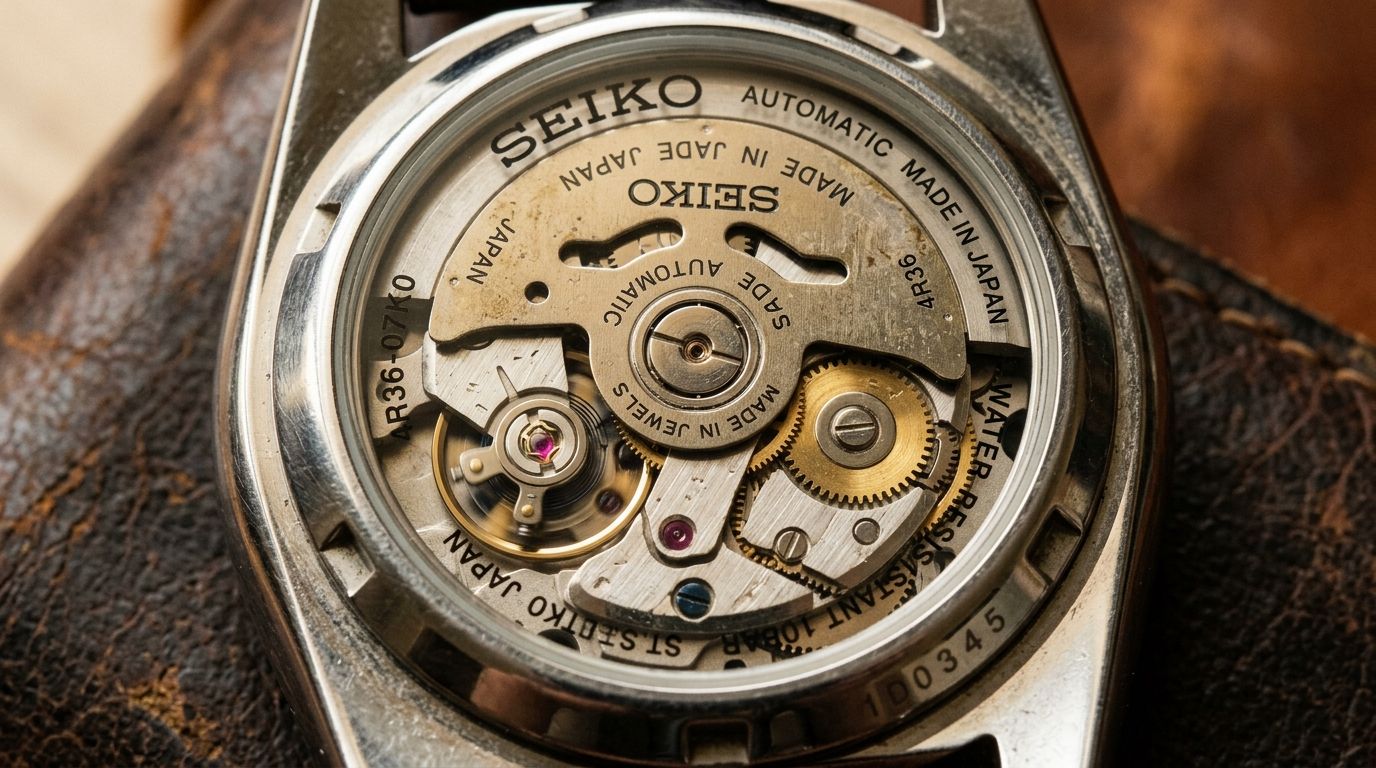
“A well-kept 7S26 was never built to set accuracy records. It was built to outlive its owner while still telling the time on a deserted beach.”
3. The wabi-sabi philosophy
At Tokeiwabi we have a soft spot for this movement, because it embodies the wabi-sabi spirit perfectly. It is not a finely finished movement — it is raw, industrial, and works exactly as it should.
4. Looking after it
Although it is very forgiving, a check-up with an independent watchmaker every 7 to 10 years will keep it running for the long term. And never use the quick-set date between 9 p.m. and 3 a.m. — you risk damaging the calendar works.
Receive our watchmaking stories
Calibre guides, new arrivals and stories from Japan — plus 10% off your first watch.