Contents
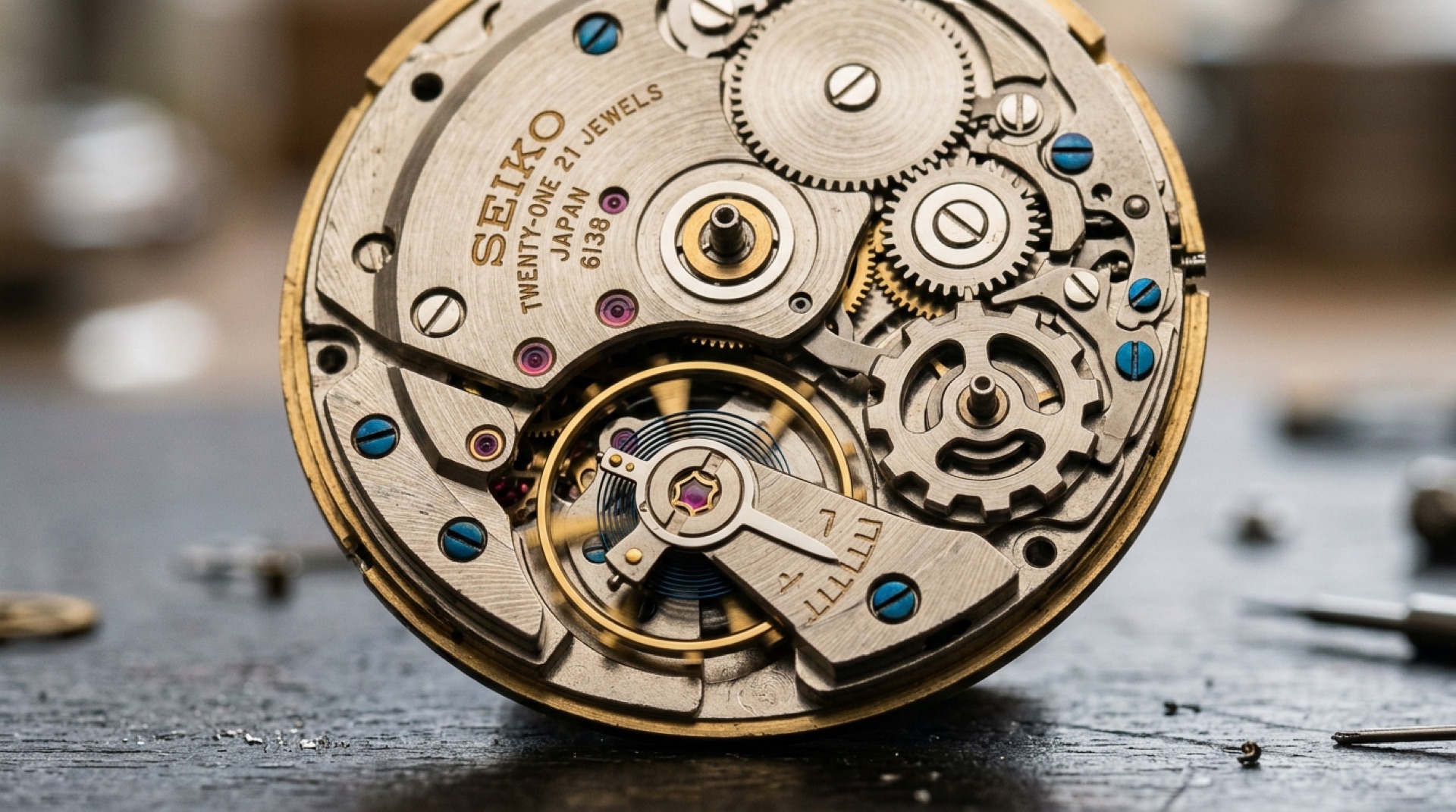
In the great book of watchmaking history, the Seiko 6138 calibre holds a place of honour. Launched at the very start of the 1970s, this movement carried over the architecture pioneered a year earlier by the 6139: a column wheel combined with a vertical clutch, a world first. Built to last and impressively robust, it powered some of Seiko’s most sought-after vintage pieces.
How the automatic chronograph came to Seiko
By the end of the 1960s, a worldwide race was under way to build the first automatic chronograph. In 1969 Seiko unveiled the calibre 6139 (with a single sub-dial), neck and neck with the Swiss Chronomatic consortium and Zenith’s El Primero. Building on that success, Seiko launched its more sophisticated successor in 1970: the calibre 6138.
Unlike the 6139, the 6138 gains a second sub-dial — letting you measure hours as well as minutes — and adds the ability to hand-wind the movement via the crown. It was the brand’s most complete and most sophisticated chronograph movement of the period.
Key technical specifications
The 6138 has nothing to envy in the prestigious Swiss calibres of its day. Its specifications speak of Japanese industrial rigour:
- Type: automatic chronograph (self-winding, with manual winding also possible).
- Control mechanism: column wheel, giving a crisp, precise action on the pushers.
- Clutch: vertical clutch, which eliminates the slight jump (“stutter”) of the chronograph seconds hand when the chronograph is started.
- Frequency: 21,600 vibrations per hour (3 Hz), with a power reserve of around 45 hours.
- Complications: quick-set day-date window, 12-hour counter (at 12 o’clock) and 30-minute counter (at 6 o’clock).
- Jewels: 21 on the 6138A; 21 or 23 on the later 6138B, depending on the version.
The icons powered by the 6138
This exceptional calibre turned several Seiko sports watches into icons, all highly prized by today’s collectors:
- Seiko 6138-8020 “Panda”: famous for its silvery-white dial and vertical black sub-dials.
- Seiko 6138-0040 “Bullhead”: instantly recognisable by its pushers and crown set at the top of the case (at 12 o’clock), suggesting a bull’s horns.
- Seiko 6138-3002 “Jumbo”: notable for a case diameter that was large for its time (42 mm) and a clean, highly legible dial.
- Seiko 6138-0011 “UFO” / “Yachtman”: a substantial chronograph in a typically 1970s case, with no visible lugs.
A tough calibre worth collecting
The Seiko 6138 still commands watchmakers’ admiration today. Its legendary toughness means it can run perfectly after more than fifty years, provided it has been looked after regularly. Donor and NOS parts still circulate on the collector market thanks to the sheer number produced, although some chronograph components have become scarce. That makes vintage chronographs fitted with the 6138 a rewarding and relatively low-risk area to collect for anyone who loves fine watchmaking.
Receive our watchmaking stories
Calibre guides, new arrivals and stories from Japan — plus 10% off your first watch.