Contents
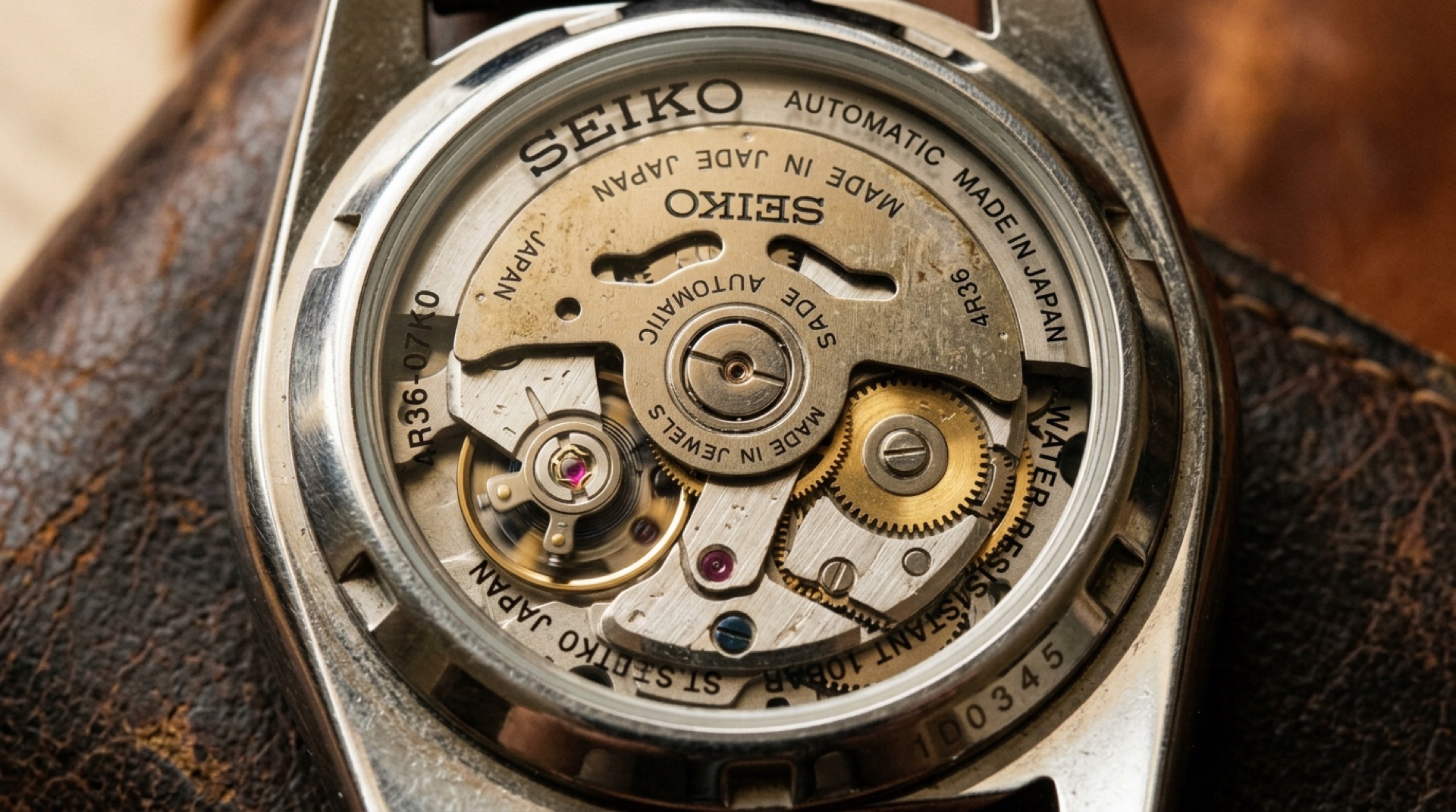
In a world where time is digitised, sliced up and displayed on cold screens, wearing a mechanical automatic watch is a small act of poetic resistance. No battery, no electronics, no connection. Just a set of gears, springs and jewels brought to life by the energy of your own movements. This is the very essence of watchmaking wabi-sabi: celebrating a living mechanism, organic and beautifully imperfect. And in that art, the Japanese manufacture Seiko has built a legendary reputation.
The Magic Lever revolution (1959)
The story of Seiko’s automatic movements takes a decisive turn in 1959 with the invention of the Magic Lever. Before this innovation, many self-winding mechanisms only harnessed the rotor’s energy in one direction of rotation.
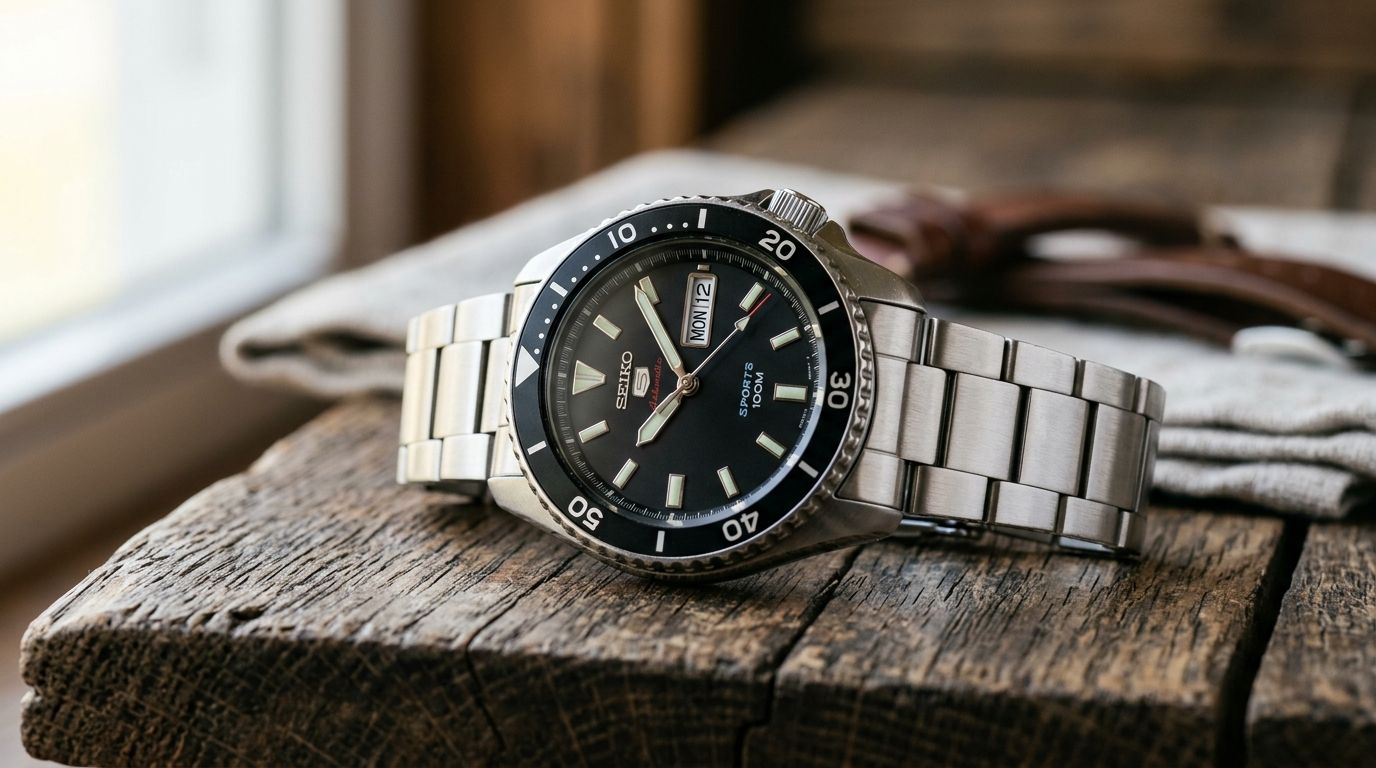
Seiko’s Magic Lever uses a very simple, remarkably clever V-shaped pawl system. Whether the rotor turns clockwise or anticlockwise, every tiny movement is converted into winding the mainspring. That unusually efficient winding allowed Seiko to build automatic watches that were tough, affordable and legendarily dependable.
The beat of time: the sweeping seconds hand
One of the great aesthetic pleasures of an automatic watch lies in the travel of its seconds hand. Unlike a quartz watch, whose seconds hand jumps abruptly once a second, the seconds hand of an automatic appears to glide continuously across the dial.
That smoothness comes from the ultra-fast oscillations of the balance wheel. On a standard movement beating at 21,600 vibrations per hour (3 Hz), the hand makes six micro-jumps per second. It is the perfect metaphor for time flowing onward, uninterrupted, rather than chopped into industrial slices.
Legendary calibres: from the everyday to the premium
Seiko has developed several families of automatic movements that power its most sought-after JDM models:
The 7S26 calibre: the indestructible workhorse
Introduced in 1996, this movement is an outright legend. With no manual winding and no hacking seconds, it powered millions of Seiko 5 watches and the legendary SKX007 diver. It has a reputation for running for 20 or 30 years untouched, shrugging off dust, damp and knocks without ever faltering.
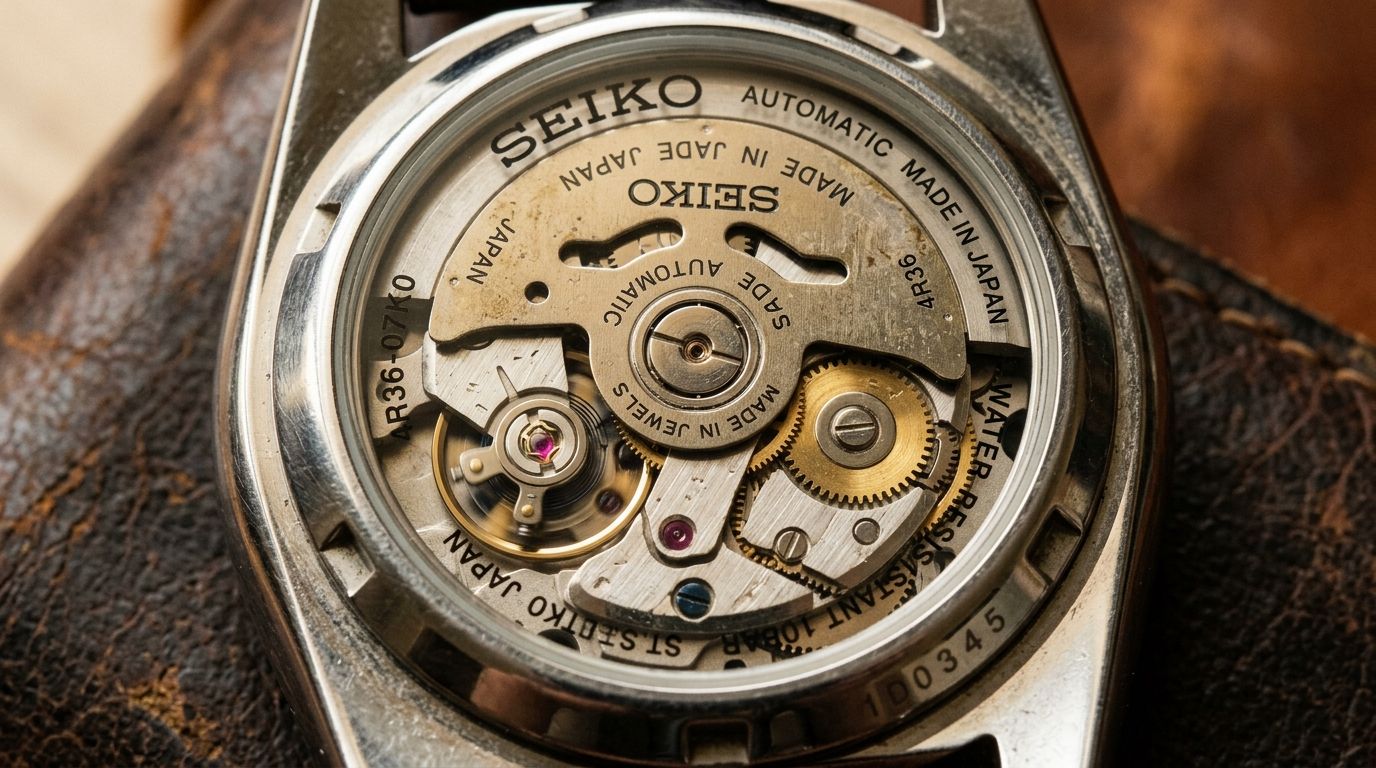
The 4R35 and 4R36 calibres: modern everyday use
Direct successors to the 7S26, the 4R calibres bring the modern features we now take for granted: manual winding via the crown, and hacking seconds so you can set the time to the exact second. They are the flagship calibres of the Seiko 5 Sports and the Presage range.
The 6R35 calibre: premium endurance
Found in higher-end models such as the well-known Seiko Alpinist and Prospex lines, the 6R35 stands out for its extended 70-hour power reserve, thanks to an exclusive alloy (Spron 510) used for the mainspring. Leave your watch on the table all weekend and it will still be running on Monday morning.
Wearing a mechanical soul on the wrist
To wear a Seiko automatic is to own something self-sufficient, free of any planned obsolescence. It is the quiet pleasure of feeling the oscillating weight turning discreetly inside the case at the slightest movement of your hand. An automatic watch does not run thanks to you — it lives with you.
Receive our watchmaking stories
Calibre guides, new arrivals and stories from Japan — plus 10% off your first watch.