Instantly recognisable, the “Panda” dial is one of the most emblematic designs in watchmaking history. Popularised by an obsessive search for legibility for racing drivers in the 1960s, this striking contrast between a light background and dark sub-dials goes well beyond a simple measuring tool: it has become a genuine aesthetic legend. Here is the meaning, the history and the cult models of this famous layout.
What is a Panda dial?
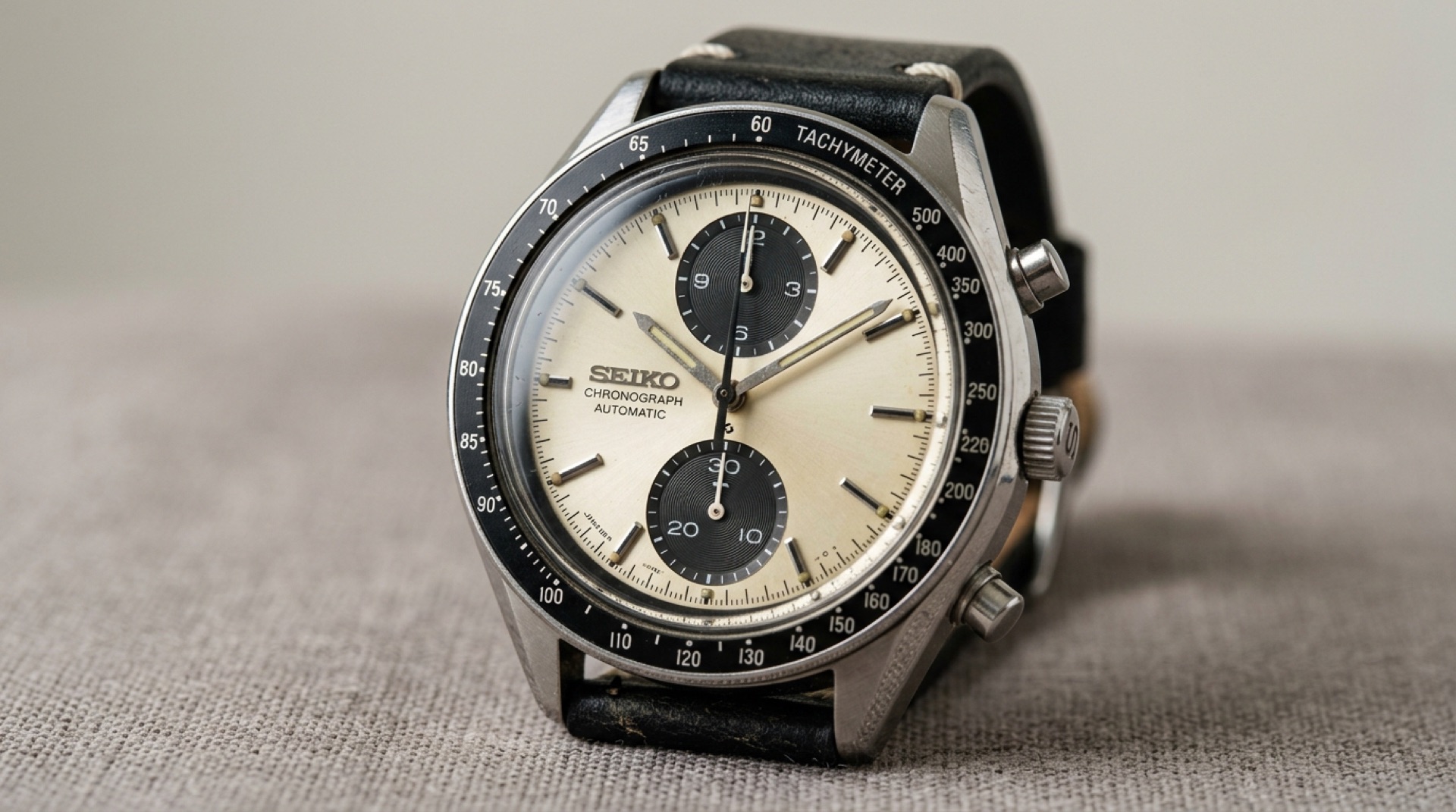
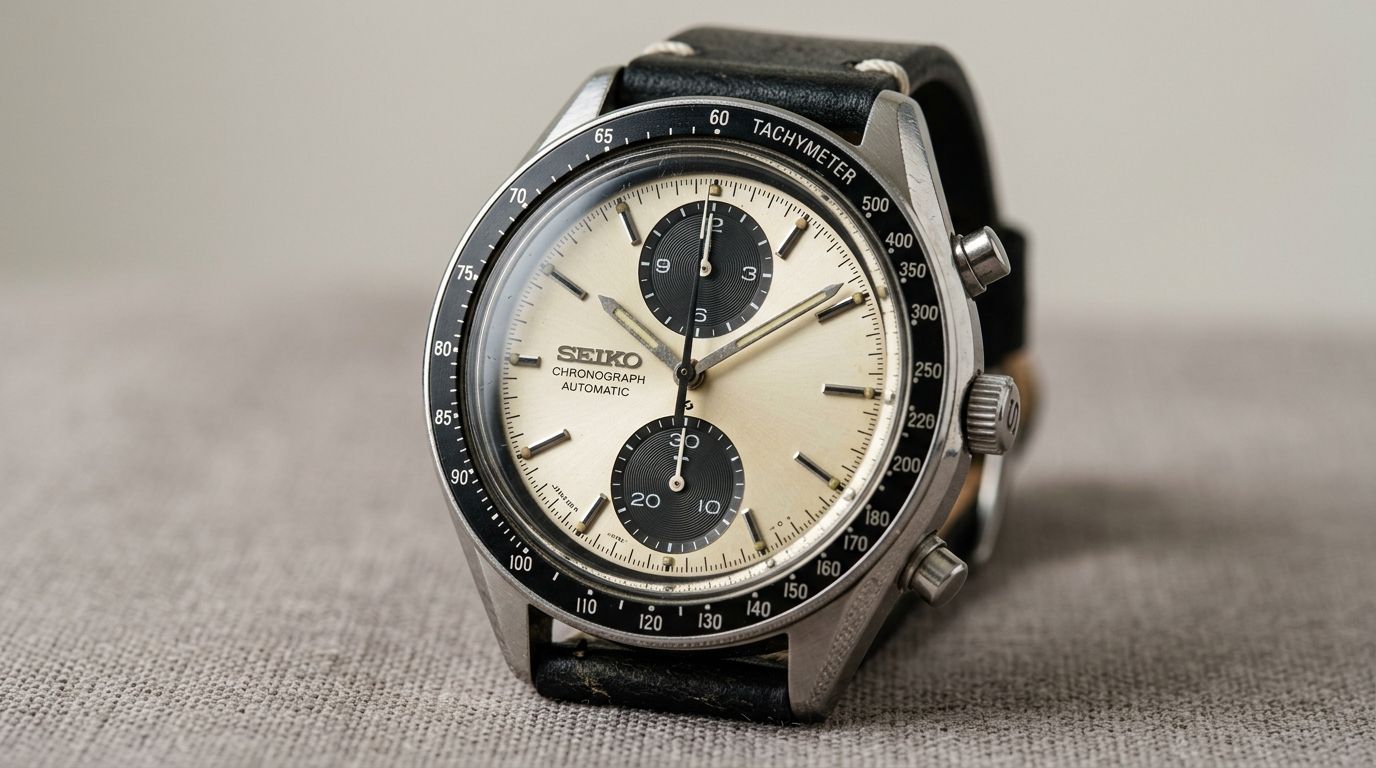
The Panda dial owes its name to its striking resemblance to the face of the famous Chinese bear. Traditionally it combines a white or cream sunburst dial with two or three black sub-dials placed at 3, 6 or 9 o’clock — the panda’s eyes. A black tachymeter scale — on the bezel, or on an inner ring beneath the crystal — often frames the dial and completes the visual balance.
There are several variations on the theme:
- The traditional Panda: light main dial (white, silver, cream) with black sub-dials.
- The Reverse Panda: deep black dial with white sub-dials, offering an equally striking contrast.
- The Vertical Panda: sub-dials aligned vertically at 12 and 6 o’clock, particularly prized on Japanese automatic chronograph movements of the golden age.
The cult models of the Panda legend
Several watches carved the Panda design into watchmaking history:
- The Rolex Daytona “Paul Newman”: refs. 6239 and 6241 — and later 6262, 6263, 6264 and 6265. Probably the most expensive and most coveted chronograph in the world, defined by its black sub-dials with Art Deco numerals on a cream-white dial.
- The Seiko 6138-8020 “Panda”: released in the 1970s, this vertical automatic chronograph (counters at 12 and 6 o’clock) is a masterpiece of Japanese design and engineering, with a distinctive twin day/date window and a substantial case that wears well.
- The Hamilton Intra-Matic Auto Chrono: a faithful modern take on 1960s sports chronographs, offered in both panda and reverse-panda dials.
- The Heuer Carrera: in its historic versions from 1963 onwards, designed by Jack Heuer with an obsession for clean legibility on the racetrack.
Why such fascination?
Beyond nostalgia for the motor racing years, the Panda dial appeals through its versatility. Its strong black-and-white contrast works with every strap — steel, aged leather or a sporty NATO — and with every outfit. It is the watchmaking philosophy of the era made visible: function creates beauty. For the vintage collector, owning a Panda chronograph is essential to celebrating the golden age of the mechanical chronograph.
Receive our watchmaking stories
Calibre guides, new arrivals and stories from Japan — plus 10% off your first watch.