Contents
A fine watch is not just its dial or the complexity of its movement. The strap is what anchors it to your wrist, and what takes the daily punishment of friction, perspiration, dust and changes in climate. In the wabi-sabi spirit, caring for your strap means letting it age with dignity, developing a patina of its own rather than wearing out before its time. Here is our complete guide to looking after the different kinds of straps and bracelets: steel, titanium, leather and nylon.
1. The stainless steel bracelet: keeping the grime at bay
Stainless steel is tough, but dust and skin oils inevitably build up between the links, which can eventually stiffen the clasp mechanism or even wear the pins through abrasion.
How to clean it:
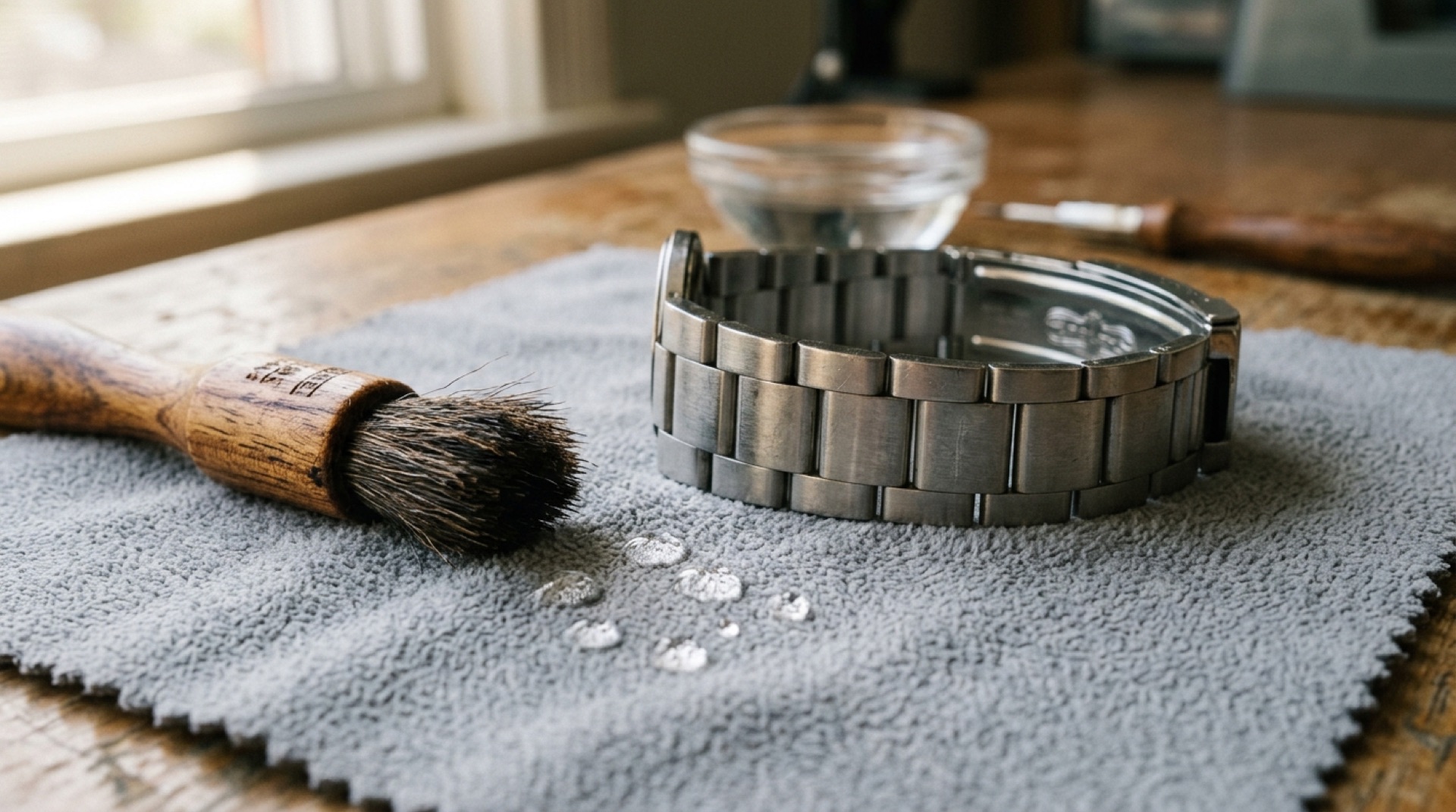
- Take the bracelet off: if you can, remove the bracelet from the case using a spring bar tool, to avoid any water finding its way into the movement — even if your watch is water-resistant.
- A warm soak: place the bracelet in a bowl of lukewarm water with a few drops of mild soap (Marseille or castile soap, or a gentle washing-up liquid). Leave it to soak for 10 to 15 minutes.
- Gentle brushing: use a soft-bristled toothbrush to work carefully between the links and lift away the deposits.
- Thorough drying: rinse in clean water and dry immediately with a clean microfibre cloth. Never let moisture sit.
2. The titanium bracelet: light, but prone to scratches
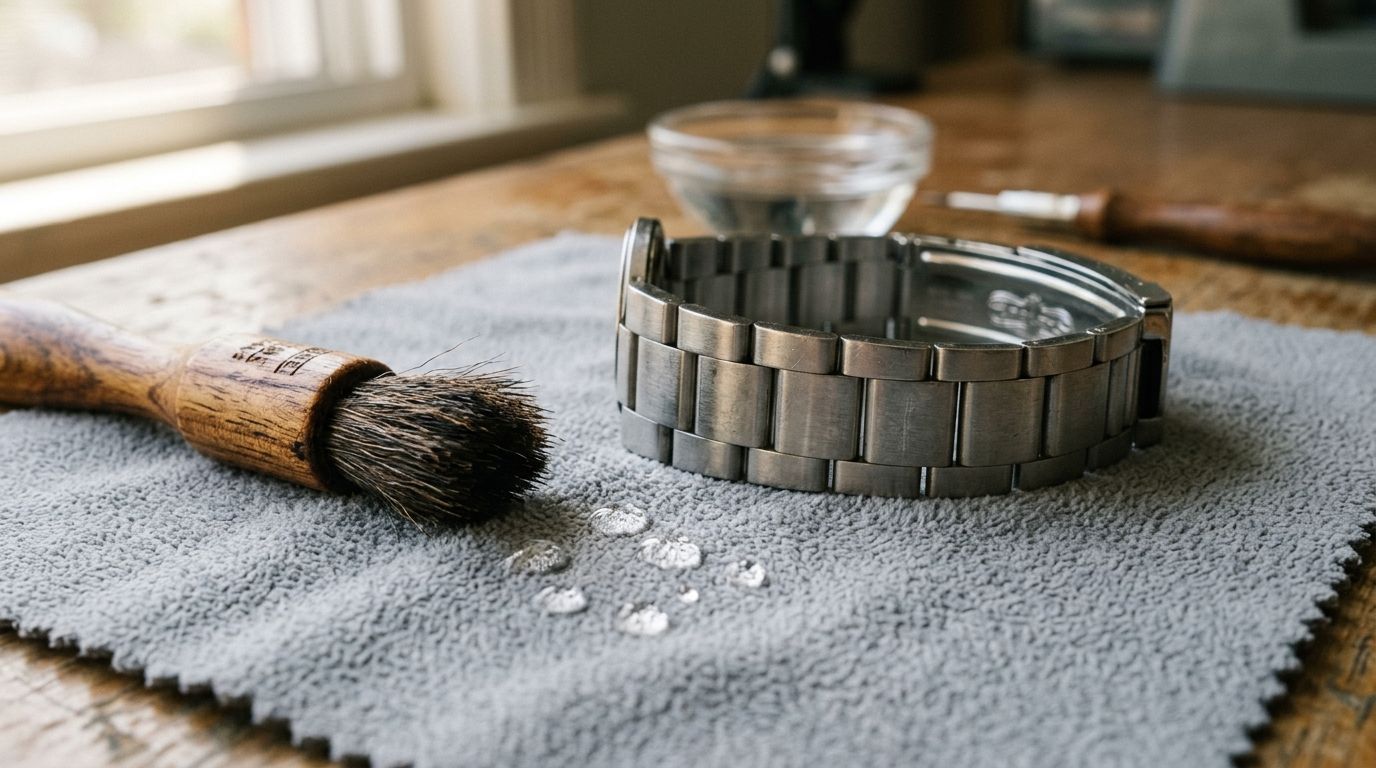
Titanium is valued for its lightness, its resistance to corrosion and its hypoallergenic properties. It does, however, form a natural oxide layer that scratches fairly easily — the familiar marks of “desk diving”.
How to care for it:
- Follow the same cleaning routine as for steel: lukewarm soapy water and a soft brush.
- A tip for softening surface scratches: on brushed (not polished) titanium, you can use an ordinary two-tone pencil eraser — the grey-blue abrasive end — or a fibreglass scratch pen. Rub very gently, following the direction of the original brushing, to blend in the micro-scratches. Never use this method on mirror-polished surfaces.
3. The leather strap: conditioning a living material
Leather is an organic material, and water and excessive damp are its worst enemies. To keep it supple and stop it cracking, it needs conditioning regularly.
How to care for it:
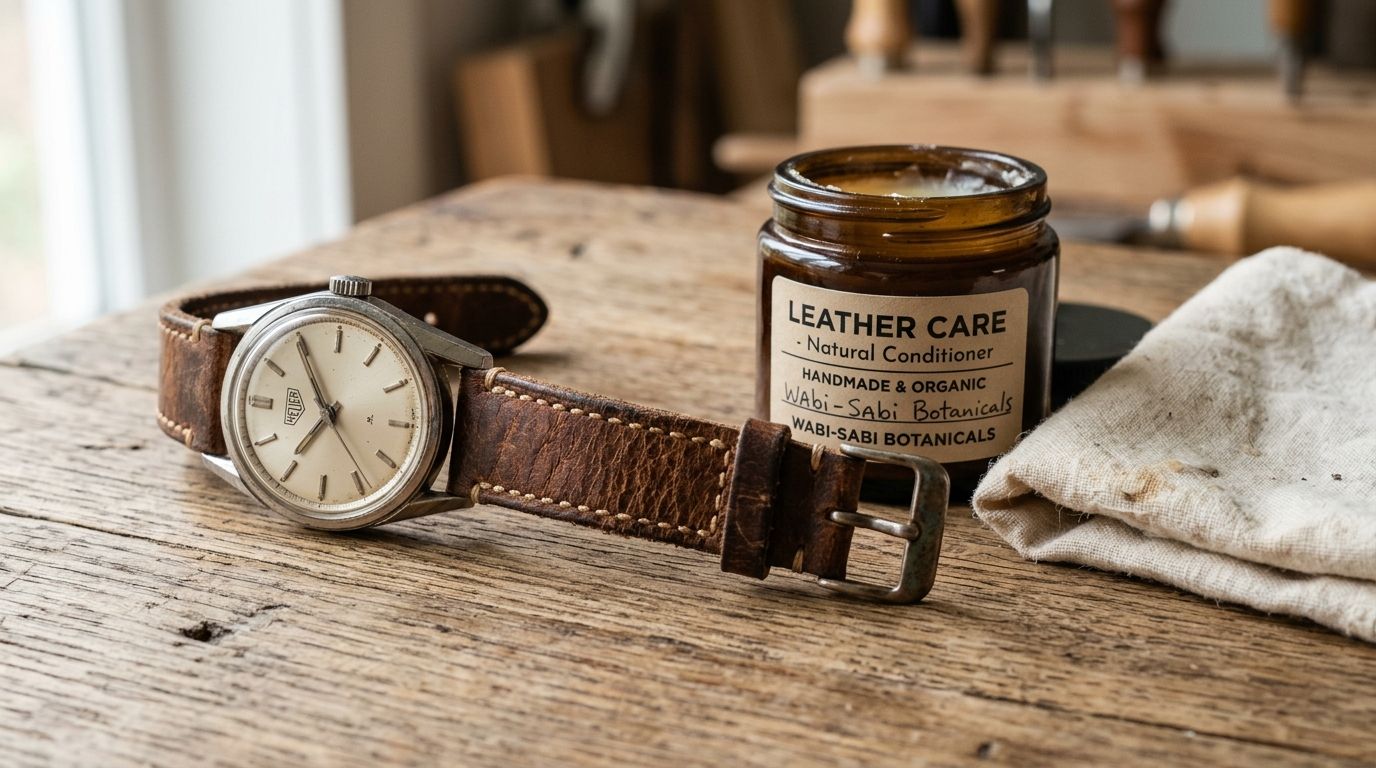
- Wiping: clean the surface with a soft cloth, barely damp, to lift the dust.
- Conditioning: apply a small amount of good-quality leather cream (or a colourless conditioning balm) with a soft cotton cloth, working in light circular movements.
- Buffing: let it dry in the open air, away from any direct heat source or sunlight, then buff with a clean cloth to remove the excess and bring back the shine.
A word of advice: avoid wearing a leather strap on hot summer days. Acidic perspiration is leather’s worst enemy and speeds up the arrival of unpleasant smells.
4. NATO (nylon) and rubber straps: the hard-wearing ones
These straps are often fitted to dive watches — Seiko Prospex or SKX models, for instance — and they are built for action.
- Nylon NATO: the easiest of all to clean. Put it in a laundry bag and run it through the washing machine with your usual wash (cool cycle, 30°C maximum). Leave it to dry flat.
- Rubber (silicone or Tropic): simply wash it under warm soapy water. Rub with your fingers to remove sea salt or chlorine after a swim, then wipe it dry with a soft cloth.
Get into the habit of these small acts of care every few weeks and you will considerably extend the life of your straps, while bringing out the best in your watch as a whole.
Receive our watchmaking stories
Calibre guides, new arrivals and stories from Japan — plus 10% off your first watch.